
Wondering how to learn a new language easily and fast? Discover proven strategies, expert tips, and daily habits that help you reach fluency quickly — even as a busy adult. Learning how to learn a new language will unlock not only access to other civilisations but also improved prospects for your future career, along with exposure to other forms of cognition. In the modern-day age, knowing how to reach out beyond language barriers and communicate in other languages is no longer an asset—it has become a superpower.
Unfortunately, many individuals shy away from language learning due to misconceptions regarding the process as being a long-lasting and extremely difficult journey that requires natural talent. But the truth of the matter is that learning a new language is easy if one decides to focus on practical approaches rather than on boring memory training. You must be asking yourself about how to learn a new language fast—your search has ended here. With this guide, we will look into how to learn a new language quickly and effectively.
Why Learning a New Language Is Worth It?
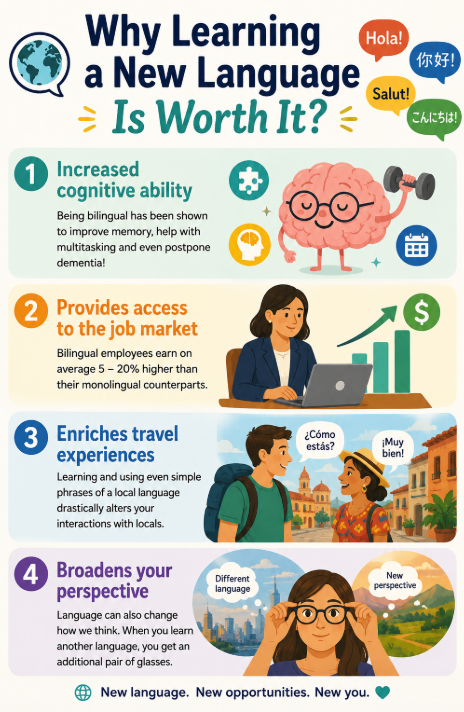
But now onto the real question: how to learn a foreign language quickly and without burning out?
How to Learn a New Language- Step-by-Step Guide
Step 1: Choose the Right Language (and the Right Reason)
Choosing the right language to study is the first stage in learning it.
When travelling abroad, learn the local language. For business purposes, find out what languages are most popular in your line of work. Finally, if it’s just for fun, go with your gut. Intrinsic motivation (learning for personal reasons) is an excellent predictor of success.
Moreover, the difficulty level of the language should be considered. English-speaking students will find that some languages are easier to learn than others. The Foreign Service Institute (FSI) rates languages based on the number of hours required for proficiency:
Category | Languages | Hours to Proficiency |
Category I (Easiest) | Spanish, French, Italian, Portuguese | 600–750 hours |
Category II | German, Indonesian, Swahili | 900 hours |
Category III | Russian, Hebrew, Hindi, Thai | 1,100 hours |
Category IV (Hardest) | Arabic, Chinese, Japanese, Korean | 2,200+ hours |
Knowing this upfront helps you set realistic expectations — a key ingredient for staying motivated.
Step 2: Build a Learning System, Not Just a Schedule
One of the biggest mistakes there is when students are trying to learn another language, is that they think it should be like doing some homework — sitting down in a chair and remembering the rules and ask for fluency right after. This is how the process does never take place, however.
If we want to find out how to learn a language in superfast speed, we need to have a particular system and this will incorporate many techniques and methods together. They include:
A. High-frequency vocabulary words
You don’t need to know all the words in a certain language in order to have a conversation on it. Research is proof that knowing 1,000-2,000 words is sufficient to comprehend 80–90 per cent of communication.
You can drill these kinds of words using Anki and Duolingo. Still other distance rep systems show the words that a person is about to forget RIGHT NOW.
B. Learn Grammar Intuitively, Not Obsessively
Grammar, while extremely important in language learning, may sometimes become an obsession, which is definitely not healthy. Rather than focusing too much on grammatical structures, learn through exposure.
Consider how a child picks up a language for the first time – do they spend hours analyzing conjugation charts? No. They simply pick up on the patterns through constant exposure to the language.
C. Use the Comprehensible Input Method
According to Stephen Krashen, a linguist, comprehensible input theory states that acquiring a language can be done effectively if messages from the target language are understood, provided they are one step higher than our existing level, termed as “i + 1” by Krashen.
Some of its practical implications include:
- Watching movies or YouTube videos in the target language (subtitles may be used if necessary)
- Reading storybooks or graded reading material
- Listening to podcasts made for the learners.
Step 3: Speak From Day One (Yes, Really)
Speaking — even if only to yourself, the moment you start learning a new language is probably the best trick of most effective ones you can ever try.
A lot of learners only speak when they “feel ready”. The problem? That day rarely comes. Practice, not preparation, builds fluency.
Here’s how to start speaking:
- Tell yourself — narrate your day in the language that you want to learn. Write about what you are doing, seeing and thinking.
- Utilise language exchange apps — Applications similar to Tandem, HelloTalk or Speaky hook you up with native speakers who need to learn your language. You learn from them, they learn from you.
- Get an online tutor — Sites like Indoberlin charge low rates for Online German classes, one-on-one sessions with native speakers or certified teachers.
- Participate in online communities — Reddit, Discord servers and Facebook groups about the language you are learning have lots of people who will enjoy talking with you!
- Make mistakes — do not fear the pain of screwing things up. Mistakes = Data, they inform you exactly what you need to work on, and natives almost always appreciate the effort.
Step 4: Immerse Yourself (Without Leaving Home)
Complete immersion, which entails moving to another nation where your target language is used, is the ideal strategy for speedy learning. However, not all of us can just relocate to Paris or Tokyo. The great news is that we can make our own immersion environments from the comfort of our homes.
This is how:
- Adjust Your Device Settings– Transform your smartphone, computer, and other communication applications into your target language. All of the prompts will suddenly become tiny language lessons.
- Use Post-Its Around Your Home– Label things around your home with the names written in your target language using Post-it notes. Each time you touch your coffee mug, go to the bathroom mirror, or open the refrigerator door, you will learn new vocabulary.
- Watch and Listen to Foreign Language Media– Instead of Netflix, watch TV shows and movies in the language you’re learning (subtitles in the same language, not in English)
- Listen to music in the language you’re learning and learn the lyrics
- Follow the YouTube channels of native speakers
- Play foreign radio stations while you work
- Think in Your Target Language
This is one of the hardest yet very useful techniques: next time when you find yourself thinking in your mother tongue, try translating those thoughts into the foreign language. Gradually, you will begin having those thoughts in the new language.
Step 5: Make It a Daily Habit (Consistency Beats Intensity)
One of the tips that is most underutilised when acquiring a language quickly is the importance of frequency over duration.
It is always better to study 20 minutes every day rather than spend 3 hours studying your target language over the weekends. The reason being that language learning happens in your sleep. The language learning process happens when you sleep, and so, studying frequently and immediately after sleeping becomes the ideal routine.
Aim to study 20-30 minutes at least per day, but you can certainly do more whenever possible. You should not miss any day.
Here’s how you create such a language study habit:
- Integrate the language learning task with one of your daily habits
- If you miss once, then make use of the “Never Miss Twice” technique
- Keep a record of your streak using language applications like Duolingo
Step 6: Use Multiple Modalities
Learning is maximised by using all your senses and channels at once. Do not confine yourself to only one application or approach.
An exemplary language lesson can be something like this:
Activity | Time | What It Trains |
| Anki flashcards | 10 min | Vocabulary recall |
| Podcast listening | 15 min | Listening comprehension |
| Speaking with a tutor | 30 min | Speaking & pronunciation |
| Reading a graded reader | 20 min | Grammar & reading fluency |
| Journaling in the language | 10 min | Writing & sentence structure |
Feel free to adjust it according to your availability and energy levels. The critical aspect is diversity – lack of interest kills consistency.
Step 7: Learn Culture Alongside Language
Language is not only a means of communication; it is an embodiment of the very culture. To learn a language properly, you must know about its culture.
- Idioms and colloquialisms can be learned (they are rarely mentioned in books).
- Traditions and holidays that the speakers of the target language celebrate should be studied.
- How native speakers use the language on social networking sites should be observed.
- You may read news articles and history written in the target language.
After understanding the culture, the language will become much easier to learn – and your interest in doing so will skyrocket.
Step 8: Track Progress and Celebrate Milestones
It takes time to learn a language, and it can easily happen that you forget about all the progress that you make. Make sure to evaluate your progress and appreciate even the smallest things that you manage to do.
Achieve milestones according to the following plan:
- First week – learn 100 necessary words
- First month – introduce yourself and talk for two minutes
- Third month – watch a five-minute video without subtitles and understand 70% of it
- Sixth month – read a children’s book cover to cover
- Twelfth month – have a half-hour-long discussion on any topic
Every milestone you achieve is evidence of the success of your method. Reward yourself because learning a language is not an easy thing to do.
Common Mistakes That Slow Down Language Learning
No matter how hard you try, there are mistakes that you will find yourself making over and over again. Avoid these:
- Perfectionism — The belief that you need to wait until you are “ready” to talk. You’ll never feel ready. Just do it.
- Apps are limiting: Duolingo is great at creating a habit, but you won’t reach fluency by using it alone. Combine it with real speaking practice and immersion.
- Mental translation — From the start, try to think in the language. The translation is merely an excuse for not speaking quickly.
- Consuming without creating — Creating is key to learning; sadly, just consuming content isn’t enough. Speak, write, and record yourself.
- Quitting Mid-Journey — There is this period called the valley of despair, which exists between 4 to 8 weeks, when you will face difficulties in learning. Hang on. That is completely normal, and when you get through the other side of it, you will realise why.
Are You Thinking of Learning a New Language- Start With German
Speaking another language is essential to open yourself up to all the possibilities in the world, and German is definitely a top choice among all others. With many millions speaking German around Europe, the benefits of mastering this particular language should not be ignored.
German is not only a foreign language but a means to get better education, international jobs, culture, and even self-improvement. Whatever goal you pursue, whether studying, travelling, or opening up your career chances, learning German can become a wise choice for you.
1. German — The Second-Most Spoken European Language
German is the primary official language for Germany, Austria and German-speaking areas of Switzerland. Globally, German is one of the most important languages spoken, with millions either being native speakers or having obtained fluency. Learning German does the job of communicating with locals and a new culture with confidence.
2. Better Career Opportunities
Several International companies prefer German-speaking people. Many industries, including engineering, automobile manufacturing, healthcare, tourism and IT, give some importance to the German language.
3. Access to Quality Education
Germany has a reputation for having an excellent education system. Several universities around the globe provide inexpensive or low-cost education options for international students. Studying German is beneficial for students because it helps them to apply for scholarships, understand study material properly and communicate with ease when they go abroad.
4. German Enhances Travel Experiences
The German-speaking nation is well known for its history, architecture, landscapes and festivals that said to be one of the reasons drew tourist from across the world to travel there. Travelling with the language you already know is better and more enjoyable. You would be able to talk and consult with locals, get those directions straight from the people, and feel the culture more.
5. Gateway to Other European Languages Made Easy
Just like English, German is a member of the Germanic language family. A lot of the words and sentence structures are very similar so it is easier for English speakers to learn. Knowing German also makes it easier to understand related languages.
6. High Demand for the German Assets
Over the years, demand for German translators, trainers, interpreters and customer support experts continues to grow. Most multinational companies will start looking either at executives or managers for initial meetings when they might need to discuss a point with German-speaking clients and partners.
Learn the German Language with IndoBerlin- Best German Language Learning Institute

Indeed, IndoBelrin German Language Institute is the best German language learning institute for aspirants across the globe. If you are on the lookout for the most appropriate institution to learn German, then Indo Berlin German Language Course is one of the topmost institutions that can meet your needs, whether you are a student, a professional, or a prospective individual looking for a study-abroad program.
Reasons to Choose Indo Berlin
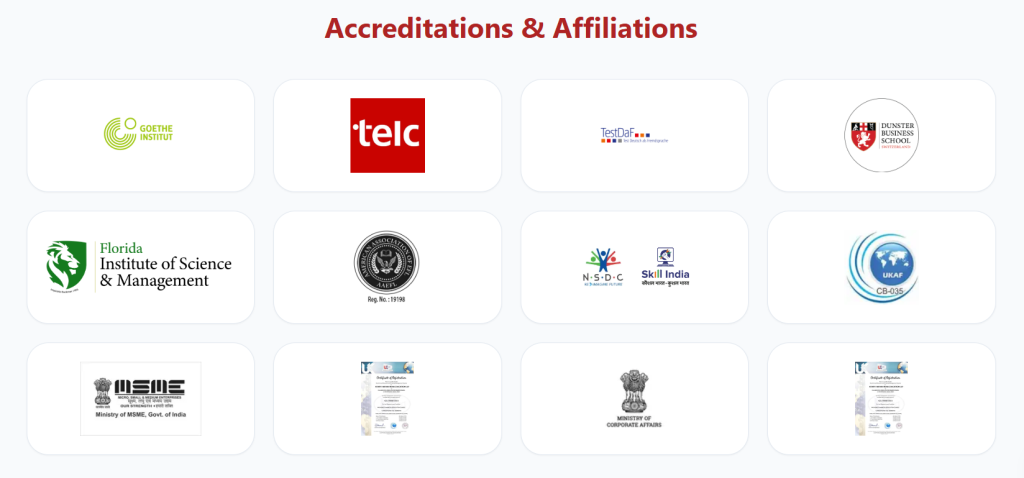
- One of the greatest strengths of the Indo Berlin program is that it covers all phases of language learning from levels A1 through C2. Grammar, vocabulary, speaking, writing, and comprehension are taught through live interactive classes. In addition, students are prepared for international standardised tests such as Goethe, TELC, and TestDaF.
- The institution utilises the Agota™ Framework, which is an innovative 10-in-1 education system aimed at enhancing language skills and career development. It comprises live online classes, project management, masterclasses, internships, e-learning, and certification guidance.
- One more thing that makes Indo Berlin a good choice is its faculty and its practice-oriented approach. The institution claims that students get individual coaching, test preparation, and study material tailored to their German language examination needs.
- The learners will be exposed to an advanced Online German Learning portal that includes video tutorials, quizzes, PPT presentations, assignments, and discussion forums. It ensures the continuity of practice even outside class hours.
- Indo Berlin also emphasises cultural learning alongside language learning. Students learn about the culture of Germany, its customs, festivals, and modes of communication, which will enable them to study or work in Germany.
- German Language Training Courses offer placement assistance in internships, jobs, and international alumni networks. Thus, this course will be helpful for those interested in working with multinational organisations and institutions abroad.
Final Thoughts: How to Learn a New Language — Start Today
Learning a new language is one of the most rewarding things you can do for your mind, your career, and your life. And now you have a clear, practical roadmap for how to learn a new language fast— without burning out. The secret isn’t talent. It’s system + consistency + joy.
Build a smart system. Show up every day. Find ways to make it fun. And don’t be afraid to sound foolish for a while — every fluent speaker was once a beginner who refused to quit. So pick your language, download your first app, and say hello to a bigger world. Ready to start your language learning journey? Bookmark this guide and come back whenever you need a boost. And remember — the best time to start was yesterday. The second-best time is right now.
Recommended Reads
- Top 10 Most Spoken Language in World
- German Language Course Fees
- What Is the Hardest Language to Learn? A Complete Guide
- Career in German Language: 7 Best Career Opportunities in German
- Different Levels of German language: A1, A2, B1, B2, C1, C2
FAQs
Q1- Why should I learn a new language?
New language will enable effective communication, create more opportunities, improve memory and understanding of other cultures.
Q2- Can I build my career by learning the German language?
Yes, it is possible as there are numerous options for careers such as Engineering, IT sector, the health care sector, tourism, the automobile sector, and foreign businesses.
Q3- How much time will be needed for learning German?
It will vary according to your practice and the course that you have chosen. Learning basic German might require a few months, whereas advanced German can take around a year or two.
Q4- Is the German language difficult for beginners?
At the beginning, it might appear difficult to learn due to grammatical aspects, but with time and proper guidance, it becomes easy to master the language.
Q5- Why should we learn the German language?
Learning the German language is beneficial for education and job sectors as well as for travelling abroad.
Ready to Build Your Career in the UAE?
Industry-focused programs with expert trainers, flexible batches and placement support.

Written by
Nidhi Gupta
Hi! My name is Nidhi Gupta, and I am a Versatile Content Writer skilled at crafting SEO-optimized and informative content related to various areas of life. In particular, I can write about SAP, foreign languages, certificates, healthcare, technology, education, and careers, among others. Being a research-oriented writer, I make complicated ideas simple for readers by providing relevant information in an easily comprehensible way. Thus, my expertise includes writing articles, blog posts, website pages, and other forms of content based on research. Along with writing, I find it interesting to mentor novice writers and provide helpful tips on content writing, SEO, and communication skills. Be it a technical or any other topic, I always do my best to craft accurate and high-quality content.

Great blog for beginners.
Simple and informative article.
Loved the practical advice shared here.
Excellent tips for learning faster.
Easy to understand and follow.
Great insights on language practice.
Great strategies for language learners.
Really enjoyed reading this blog.
Very clear and well written.
Great article with useful insights!
Excellent advice for beginners.
This blog makes learning easier.
This blog is very informative and practical.
Amazing guidance for beginners.
Amazing guidance for beginners.