CPA Course: Details, Eligibility, Duration, Fees and Scope in 2027

If you are interested in pursuing a career in accounting and finance, then the CPA Course is definitely one of the most discussed international designations of 2027. The CPA, which stands for Certified Public Accountant, is awarded by the American Institute of Certified Public Accountants (AICPA). The designation is viewed as the highest possible standard of international accountancy qualification by the professionals who aim to operate internationally, particularly within the US, the Middle East, and, more recently, within Global Capability Centres (GCCs) in India.
The CPA Course is one of the most prestigious designations in the field of accountancy for those who aspire to build a lucrative career in the domain of finance, auditing, taxation, consultation, and business advisory services.
As companies adopt global accounting standards, the demand for Certified Public Accountants (CPAs) is growing exponentially. If you’re a commerce graduate, CA, CMA, ACCA or just someone interested in finance, going for a CPA certification will give you an edge in your career and income level.
In this post, I will cover all about the CPA Course, its eligibility criteria, syllabus, time period, fees, exam pattern, jobs, salary, and scope till 2027.
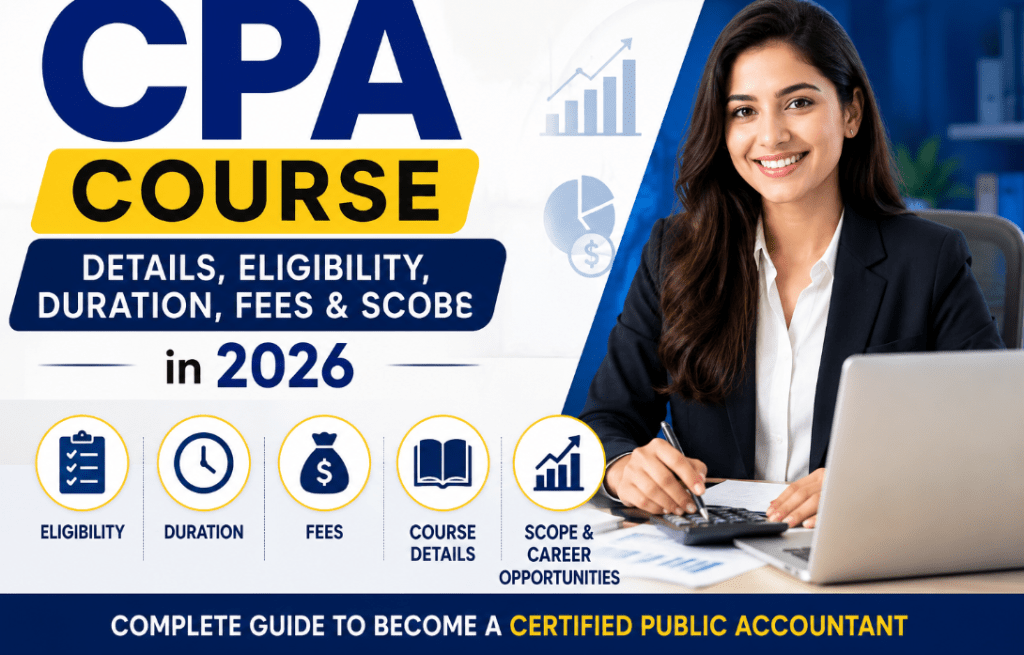
What is the CPA Course? A Quick CPA Overview
The CPA is a professional licensing credential — not just a certificate — that authorises accountants to practice public accounting in the United States. It’s administered through the Uniform CPA Examination, which the AICPA sets in coordination with the National Association of State Boards of Accountancy (NASBA), while individual U.S. state boards of accountancy grant the actual license.
Because CPA licensure is state-specific rather than centralised under one national body, requirements for eligibility, credit hours, and experience can vary slightly depending on which state board a candidate applies through. This is particularly relevant for international students, including a large number of Indian aspirants, who often choose “candidate-friendly” state boards known for flexible credit-hour and residency rules.
In recent years, the CPA credential has evolved significantly. The exam moved to a “Core-plus-Discipline” model, meaning every candidate must clear three mandatory Core sections and then choose one Discipline section based on their career interest. This restructuring reflects how modern accounting work has expanded to include data analytics, information systems, and specialised tax and reporting skills — making the CPA Qualification more relevant to today’s technology-driven finance roles than ever before.
CPA Overview
Particular | Details |
| Course Name | CPA Course |
| Full Form | Certified Public Accountant |
| Course Level | Professional Certification |
| Governing Body | AICPA |
| Exam Mode | Computer-Based |
| Total Exams | 4 |
| Duration | 12–18 Months (Average) |
| Eligibility | Bachelor’s Degree (varies by state board) |
| Average Course Fees | ₹1.8–4.5 Lakhs |
| Average Salary | ₹6–20 LPA+ |
| Career Opportunities | Auditor, Tax Consultant, Financial Analyst, Accountant, Consultant |
CPA Course Details
The CPA course prepares the candidate for a successful career in the field of accounting and finance. It includes topics like accounting fundamentals, auditing, taxation, ethics, business law, and other modern accounting technologies. Differing from the conventional degree program, the CPA course includes business knowledge needed in the actual business environment.
The topics include:
- Financial accounting
- Auditing
- Taxation
- Corporate governance
- Risk management
- Internal control
- Ethics
- Business analysis
- Information systems
- Regulatory compliance
Because the qualification is globally respected, employers consider CPAs valuable assets for handling complex financial responsibilities.
Why opt for the CPA Course?
There are a lot of advantages associated with the CPA course for accounting practitioners. A few of the key advantages include:
- International recognition
- Attractive remuneration packages
- Improved career prospects
- Increased job options
- High demand in multinational companies
- Knowledge of US GAAP
- Understanding of global accounting standards
- Effective networking opportunities
- Professional recognition
- Career flexibility
Accountants who have a CPA designation generally get promoted to leadership positions sooner than those without CPA.
CPA Qualification
The CPA qualification is the best choice for those who wish to have expertise in:
- Financial Accounting
- Auditing
- Taxation
- Financial Reporting
- Corporate Finance
- Compliance
- Consulting Services
- Internal Audit
- Risk Management
To get the CPA designation, one must typically:
- Be educationally qualified
- Clear all CPA examination modules
- Be experience qualified
- Be ethically qualified (depending upon state)
These vary from State to State in USA.
CPA Course Eligibility: Who Can Apply?
Another frequently searched topic by the aspirants is the CPA Eligibility for the course.
The eligibility varies according to the State Board of your application. Eligibility criteria include the following:
1. Educational Eligibility
Bachelor’s degree in Commerce, Accounting, Finance, or equivalent subject
Or the international equivalent of the bachelor’s degree
Other degrees recognised in certain States include:
- CA
- CMA
- ACCA
- MBA in Finance
2. Credit Hours Requirement
Approximately 120-150 semester credit hours are needed in many US States. Depending upon their education, Indian graduates may require some extra credit hours.
3. English Proficiency
A good command of English is required by candidates as the test is conducted in English only.
CPA Course Eligibility: Who Can Apply?
CPA Exam Eligibility is the one that has been searched a lot by many individuals due to the fact that the criteria are quite different from those applicable for Indians in case of other certifications, such as CA or CMA. Some general requirements would be as follows:
1. Educational Requirements:
Usually, a candidate needs to be in possession of a degree in commerce, accounting, finance, or any other field relevant to that.
2. Credit Hours:
- In order to appear in the CPA examination, the majority of the state boards require the completion of 120 credit hours.
- 150 Credit Hours Requirement (for obtaining certification): In order to obtain the CPA certification, candidates need to complete 150 credit hours, which is 30 credit hours more than the standard three-year undergraduate degree in India.
3. Closing the Credit Gap:
As most Indian bachelor’s degrees offer 90–120 credit hours, similar to the U.S., many students require supplementary credits, a graduate degree, and/or professional association membership in order to fill the gap. Many CPA preparatory programs have introduced specialised ‘bridge’ courses which can help a candidate close the gap.
4. Work Experience Requirement:
Some states mandate that applicants complete a minimum of 1 to 2 years of appropriate work experience under the direction of a licensed CPA prior to issuing the CPA certificate.
5. State Boards Choice:
Eligibility requirements are state-specific; therefore, many international candidates prefer to file applications at those state boards which are considered more flexible when it comes to evaluating foreign qualifications, like Montana, Colorado, New Hampshire, or Virginia. It should be mentioned that you do not have to reside in or intend to practice in the United States in order to submit your application to a certain state board.
As far as the chances of alterations in state-specific laws are concerned, it is highly advised that you recheck the current regulations on your own from the NASBA CPA Central Website or your respective state board website.
CPA Course Duration
One of the most attractive aspects of the CPA Qualification, compared to some other professional accounting credentials, is its relatively compact timeline. The typical CPA Course Duration ranges from 12 to 18 months, depending on how quickly a candidate prepares for and clears all four exam sections.
On an average basis:
| Approach | Duration |
| Fast track | 9-12 months |
| Average | 12-18 months |
| Professional people | 18-24 months |
Candidates mostly finish their course within 1-1.5 years.
A period known as “conditional credit” follows the successful passage through each initial examination segment, where the candidate must pass all subsequent segments before the period ends. Traditionally, this period was 18 months long; however, today most regions allow the more flexible 30-month period. The most realistic estimate for the completion of all segments is 12-18 months, as it takes about three months to successfully complete one segment and complete the necessary review course.
For people who work during the day and prepare only in the evenings and on the weekend, this process takes slightly longer, and full-time students usually manage to complete the preparation in 12 months.
CPA Exam Structure
The CPA exam structure is a modern competency-based one. Normally, it comprises four test sections.
These include:
- Financial accounting
- Auditing
- Taxation
- Business analysis
The exam includes:
- Multiple-choice questions
- Simulations tasks
- Writing
Use of computers makes it convenient for test takers around the world.
Syllabus for CPA Courses
The syllabus is concerned with advanced knowledge in accounting and skills.
Areas covered in detail include:
1. Financial Reporting
- Financial statements
- Accounting principles
- Balance sheet
- Income statement
- Cash flow statement
2. Auditing
- Audit planning
- Internal control
- Audit reports
- Risk analysis
- Professional ethics
3. Taxation
- Federal income tax
- Personal income tax
- Corporate tax
- Taxation issues
- Property transactions
4. Business Concepts
- Corporate governance
- Economics
- Finance
- Information technology
- Strategic management
CPA Courses Fees
Among the factors that should be taken into consideration while preparing for the examination are the CPA Course Fees. The approximate fees are as follows:
Fees Approximate cost
- Evaluation Fees ₹15,000 – ₹40,000
- Application Fees ₹10,000 – ₹25,000
- Exam Fees ₹1.2 – 2 Lakhs
- Study Material ₹40,000 – ₹1 Lakh
- Coaching ₹50,000 – 2 Lakhs
- Total Estimated Cost ₹1.8–4.5 Lakhs
In total, the amount spent will depend on the coaching institute, the study materials, and other costs incurred through the state board. Overall, the cost of taking the CPA examination by an Indian candidate is estimated between INR 2 lakh and INR 5 lakh, which include the costs of evaluation, exams, and a review course. It is much lower in comparison with a full-time MBA and offers considerable earnings in accounting, audit, and finance positions.
Moreover, it is important to take into account possible unforeseen expenses such as rescheduling fees, fees for the exam retake, and NTS expiry.
CPA Skills
Some skills must be acquired before being successful as a CPA.
These skills include:
- Analyzing
- Accounting skills
- Mathematical skills
- Communicating
- Time management
- Ethical behavior
- Decision making
- Problem solving
- Attention to details
- Computer technology
These skills enable people to become efficient in their work environment.
Career in CPA: Job Roles and Opportunities
The scope of career opportunities in the domain of CPA is vast and spread across different industry verticals and locations. CPA licensees are known to manage important finance-related responsibilities and it denotes an internationally recognised level of competency in the field. CPA license holders usually go on to become:
- Auditors – conducting internal or external audits for corporates or public sector organisations
- Tax Consultant/Advisor – providing tax advice to individuals and corporates
- Financial Analyst/Controller – managing financial planning, accounting and forecasts
- Forensic Accountants – investigating financial discrepancies and fraud
- Risk and Compliance Specialist – especially considering the increasing regulations globally
- Roles in Finance Management or CFO roles – as many CPAs progress into leadership roles over the course of their careers
Specifically in India, there has been an increased demand for CPA qualified candidates owing to the setting up of Global Capability Centres (GCCs) by multinational organisations. The Big 4 firms (Deloitte, PwC, EY, KPMG), top technology firms having their finance centres in India and international banks/consultancy firms are all hiring CPA holders.
Scope in CPA: Why It Matters in 2027
The Scope of CPA is still broadening owing to the need of skilled professionals having knowledge of U.S. GAAP, international financial reporting standards, and, increasingly, integrated technology in the finance function. Some trends will influence the future of CPAs in 2027:
- AI & Automation Integration: With automation being increasingly implemented in accounting processes, CPAs who know how to operate and collaborate with AI-enabled applications and analytics platforms are becoming even more sought-after than before, thus forcing many CPA candidates to acquire additional certifications to be ready to work with AI in accounting.
- Mobility: Unlike most domestic accounting qualifications, the CPA certification provides opportunities of global recognition and professional mobility in the United States and many other jurisdictions, such as Canada and Middle Eastern countries.
- Talent Shortage: Accounting professionals, especially in the United States, have experienced a recognized talent shortage recently, increasing the demand (and, frequently, paychecks) for qualified CPAs.
- Salary Potential: Although the salary will differ depending on job position, experience, and geographic location, CPAs in India typically earn salaries in the bracket of about ₹6-9 LPA, but people who work in U.S.-based organizations earn higher salaries and the annual salary can be expected to fall in the bracket of $60,000-$85,000+.
CPA vs Other Accounting Qualifications: A Quick Note
Feature | CPA | CA | ACCA |
Recognition | Global | India | Global |
Primary Focus | US Accounting | Indian Accounting | International Accounting |
Exams | 4 | Multiple | 13 Papers |
Duration | 12–18 Months | 4–5 Years | 2–3 Years |
Difficulty | Moderate to High | High | Moderate |
Best For | MNCs & US Companies | Indian Practice | International Finance |
CPA Salary in India and Overseas
Factors affecting salary include experience, employer, industry, and location.
India
Experience Average Salary
Newbies ₹6-10 LPA
3-5 Years ₹10-18 LPA
Experienced Individuals ₹20-40 LPA and more
Salary Abroad
CPAs working in countries such as the US, Canada, UAE, Australia, and Singapore tend to earn much more in salary.
CPA Salary in UAE – Based on Experience
Experience | Average Monthly Salary | Average Annual Salary |
| Fresher (0–2 years) | AED 6,000–10,000 | AED 72,000–120,000 |
| 2–5 years | AED 10,000–18,000 | AED 120,000–216,000 |
| 5–10 years | AED 18,000–30,000 | AED 216,000–360,000 |
| 10+ years | AED 30,000–50,000+ | AED 360,000–600,000+ |
Scope for CPA in 2027
The Scope for CPA has grown due to the demand for professionals who possess knowledge about global accounting standards and financial reporting.Some major areas that are growing are:
- Big 4 Firms for Accountancy
- MNCs (Multinational Companies)
- Banks
- Financial Firms
- Fintech Firms
- Consultancy Firms
- Governments
- Healthcare
- Manufacturing
- Tech Firms
CPAs who combine their knowledge about accounting and analytics with technology will always be in demand due to automation.
Top Employers Hiring CPAs in the UAE
- Deloitte
- PwC
- EY
- KPMG
- Grant Thornton
- BDO
- Emirates NBD
- HSBC
- Amazon
- Accenture
- Oracle
- ADNOC
Factors Influencing Salary for a CPA in the UAE
Several factors affect the salary for a CPA:
- Professional experience
- Specialisation within an industry
- Experience with Big Four firms or multinationals
- Certifications such as CFA, CMA, and ACCA
- Proficiency with ERP systems such as SAP and Oracle
- Location (High salaries in Dubai and Abu Dhabi)
How to Become a CPA?
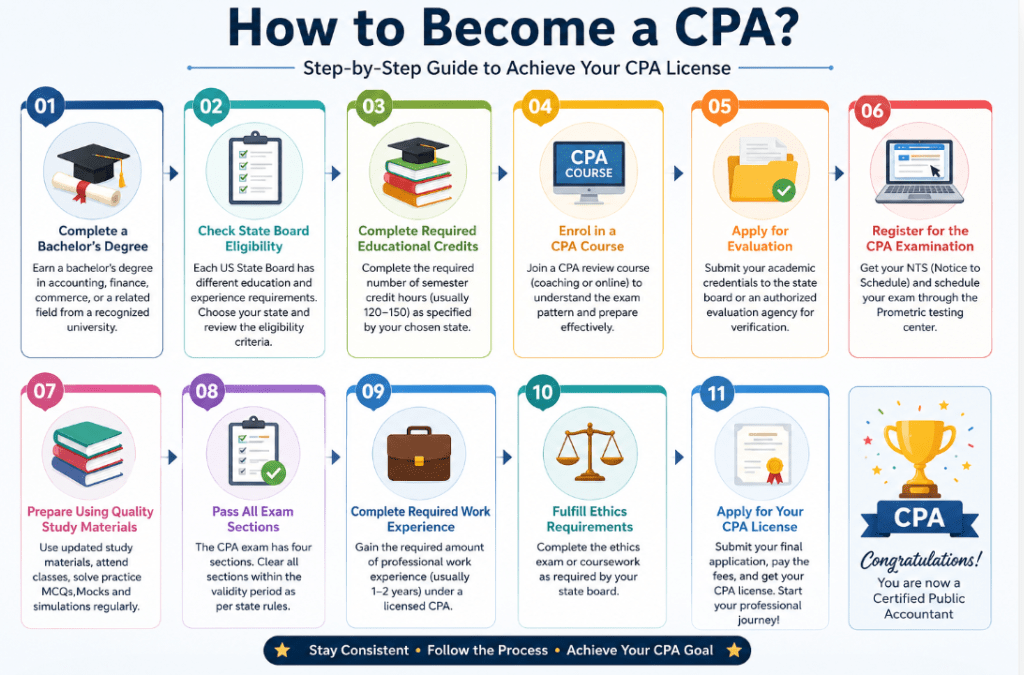
Henry Harvin- Best Institute for US CPA Course

In case your plan is to become a CPA, then enrolling in the Henry Harvin CPA Course will be a good way to train yourself in preparation for the CPA exam. This course is ideal for commerce students, finance professionals, accountants, CAs, CMAs, and prospective CPAs looking forward to mastering US accounting and auditing skills.
Reasons for Choosing the Henry Harvin CPA Course
Henry Harvin offers a practical learning environment where students receive instruction from experienced accountants and financial experts, along with useful materials to prepare themselves for the CPA examination. The following are some of the major highlights of the course:
- Live online classes delivered by professionals in accounting and finance
- Coverage of the CPA exam syllabus
- Study material and e-learning
- Practice tests and mock exams
- Accounting case studies
- Weekday and weekend batches for working people
- Expert trainer-led doubt-clearing sessions
- Lecture videos available for revision
- Career counselling and interview preparation
- Job placement through the learning ecosystem of Henry Harvin

AGOTA™ Framework of Henry Harvin
The course is delivered through Henry Harvin’s AGOTA™ Framework that concentrates on building skills along with knowledge and career readiness. This includes:
- Live training sessions by instructors
- Self-paced learning portal
- Masterclasses by industry professionals
- Assessment and quizzes
- Assignments
- Benefits of Gold Membership
- Career development
- Internships
- Placement support
- Entrepreneurship guidance
Career Advantages
Taking up the CPA study course may assist the applicants in acquiring the knowledge and skills needed to pass the CPA examination. With the CPA designation, it increases the chances of landing careers in areas such as auditing, taxation, accounting, consultancy, and corporate finance within multinational corporations, consultancies, and globally integrated centres. Career results would be subject to meeting the CPA licensure requirements.
Final Thoughts
The CPA Course is an ideal qualification for accounting and finance professionals who aspire to have a successful career on a global level. The international acceptance, industry-oriented course structure, and lucrative salary make CPA Course a useful credential in the current tough job market. Whichever area in the field of accounting and finance interests you—be it multinational corporations, consultancy firms, banking institutions, or global accounting firms—a CPA designation can help you advance your career in that area.
Before registering yourself in the course, learn about CPA Course Eligibility, CPA Course Duration and CPA Course Fees. With firms continuing to grow their presence internationally and using international accounting standards, the CPA Course promises a bright future. As the scope of CPA increases across sectors by 2027, choosing to study the CPA Course could prove a fruitful decision.
Recommended Reads
- CPA Salary in India: Average Pay Per Month & Career Growth
- How to Start a Career as a CPA in India
- ACCA vs CPA: Difference & Which is a Better Career Option?
- 7 Powerful Career Benefits of Doing a CPA Course
- ACCA Course: Details, Qualification, Duration, Fees and Careers 2027
FAQs
Q1- What is the Cost of the CPA Course?
The overall cost will be in the range of ₹1.8 lakh to ₹4.5 lakh. This includes fees for the application, examination, study material, and also coaching (optional).
Q2- Is CPA recognised in India?
Yes. The CPA course is recognised by many multinational companies, consulting firms, and also global capability centres in India.
Q3- Can Indians do the CPA course?
Yes. Indians with a bachelor’s degree can join the CPA course if they satisfy the education and credit requirements of the US State Board.
Q4- Is the CPA course better than the CA?
Both courses have their pros and cons depending on the goal of the individual. The CPA course is very good if you want to pursue a career in international accounting, especially in the USA.
Q5- Who can take the CPA Course?
Anyone who holds a bachelor’s degree in commerce, accounting or finance, or any equivalent qualification, may qualify, depending on the eligibility criteria of the selected US state board.
Ready to Build Your Career in the UAE?
Industry-focused programs with expert trainers, flexible batches and placement support.

Written by
Nidhi Gupta
Hi! My name is Nidhi Gupta, and I am a Versatile Content Writer skilled at crafting SEO-optimized and informative content related to various areas of life. In particular, I can write about SAP, foreign languages, certificates, healthcare, technology, education, and careers, among others. Being a research-oriented writer, I make complicated ideas simple for readers by providing relevant information in an easily comprehensible way. Thus, my expertise includes writing articles, blog posts, website pages, and other forms of content based on research. Along with writing, I find it interesting to mentor novice writers and provide helpful tips on content writing, SEO, and communication skills. Be it a technical or any other topic, I always do my best to craft accurate and high-quality content.

This article provides a clear overview of the CPA course. I especially liked the explanation of eligibility and career opportunities, as it answered many of my questions.
Thank you for sharing such detailed information about the CPA certification. The sections on course duration and fees were particularly helpful for planning my next steps.
Very informative post! The breakdown of the CPA course structure and future career scope made it much easier to understand what to expect in 2026.
I was looking for updated information on the CPA course, and this blog covered all the important points in one place. Great job explaining everything in a simple way.
The article is well-organized and easy to read. The insights into eligibility criteria and career prospects are especially useful for students considering a career in accounting.
This blog answered many of the questions I had about the CPA certification. The explanation of the scope and benefits of pursuing the course was very informative.
Excellent write-up! I appreciate the detailed information on course fees, eligibility, and career opportunities. It will definitely help aspiring CPA candidates make informed decisions.
I found this article very useful for understanding the CPA course roadmap. The practical information and updated details make it a valuable resource for beginners.
Thanks for publishing such a comprehensive guide. The content is easy to understand and provides a good overview of what students should know before enrolling in a CPA program.
This is a helpful and well-researched article for anyone interested in the CPA qualification. I look forward to reading more career-focused guides and certification updates like this.
I recommend this CPA Course to anyone serious about becoming a CPA. The teaching quality is really impressive.
I am satisfied with my experience in the CPA Course. The faculty, study materials, and regular guidance kept me motivated throughout the program. It has been a worthwhile investment in my career.
I was initially worried about the CPA Course Fees, but the flexible payment options made enrollment very easy. The course has been worth every rupee.
I was looking for genuine guidance on the CPA Course, and this article exceeded my expectations. Every point is explained clearly. It is very useful for students planning their future.
The support team answered all my questions about CPA Course Eligibility patiently.